
Travel and Visa
This page and the resources below provide helpful information to assist with planning your travel to Australia and getting around during your stay.
Obtaining Your Visa
- Visitor (subclass 600) Business stream visa – for more information, click here
- Electronic Travel Authority – ETA (subclass 601) – for eligible passport holders and more information, click here
- eVisitor (subclass 651) Business stream visa – for eligible passport holders and more information, click here
Customs
Delegates carrying commercial goods or samples may need to obtain permits for their goods depending on the nature of the goods, regardless of value. Quarantine and wildlife regulations and other restrictions may also apply to certain goods. Australia’s customs and biosecurity laws are strict – bringing in food, plant material, and animal products is heavily regulated and must be declared. All travellers must declare amounts of $10,000 or more in foreign or Australian currency (notes and coins) you take into or out of Australia. For more information visit www.customs.gov.au.
Currency, Banking, Taxes and Tipping
All prices quoted for APHC27OPCC are in Australian Dollars (AUD) and include a Goods and Services Tax (GST). In Australia, GST is calculated at 10%.
Banks are open Monday to Friday from 9.30am – 4.00pm (5.00pm on Friday).
Tipping is uncommon and unexpected in Australia. It is only offered after exceptional services and may be between 5% and 10% of the total bill.
Changing Money
International airports and major hotels provide money-changing facilities. Automatic Teller Machines (ATMs) are widely available.
The Tourism Refund Scheme (TRS)
International travellers can claim a refund of the Goods and Services Tax (GST) paid on goods bought in Australia. The refund only applies to goods taken as hand luggage upon departure. The refund will be paid on goods costing A$300 or more, bought from the same store. For details visit www.customs.gov.au.
Credit Cards
Major credit cards, particularly VISA and Mastercard, are widely accepted. Most places also accept American Express.
Credit card surcharges are typically applied, and you may need to request a receipt for expense claim purposes.
Emergency Phone Numbers
In the case of an emergency, call triple zero (000) for ambulance, fire or police assistance throughout Australia.
Getting to Adelaide
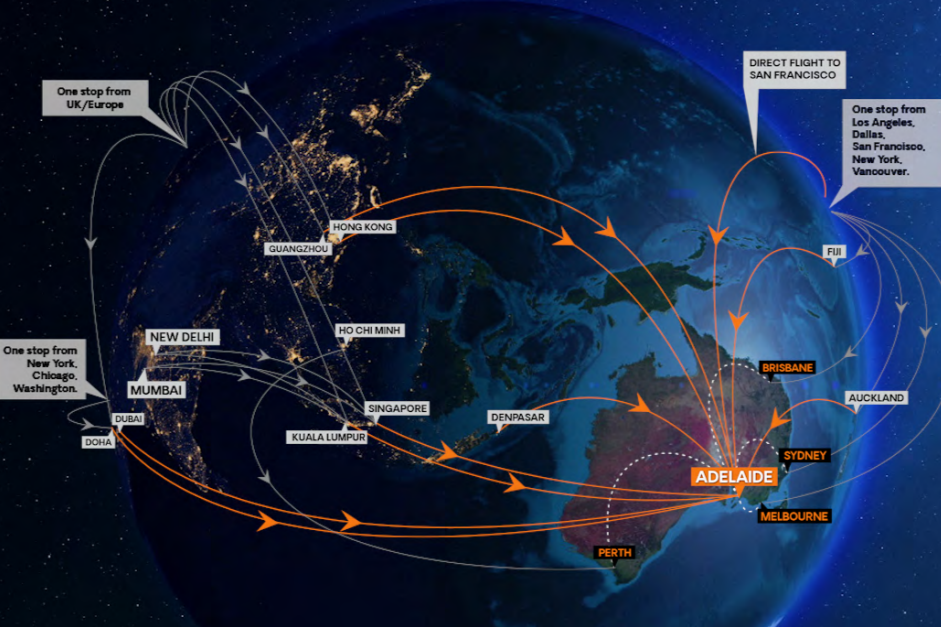
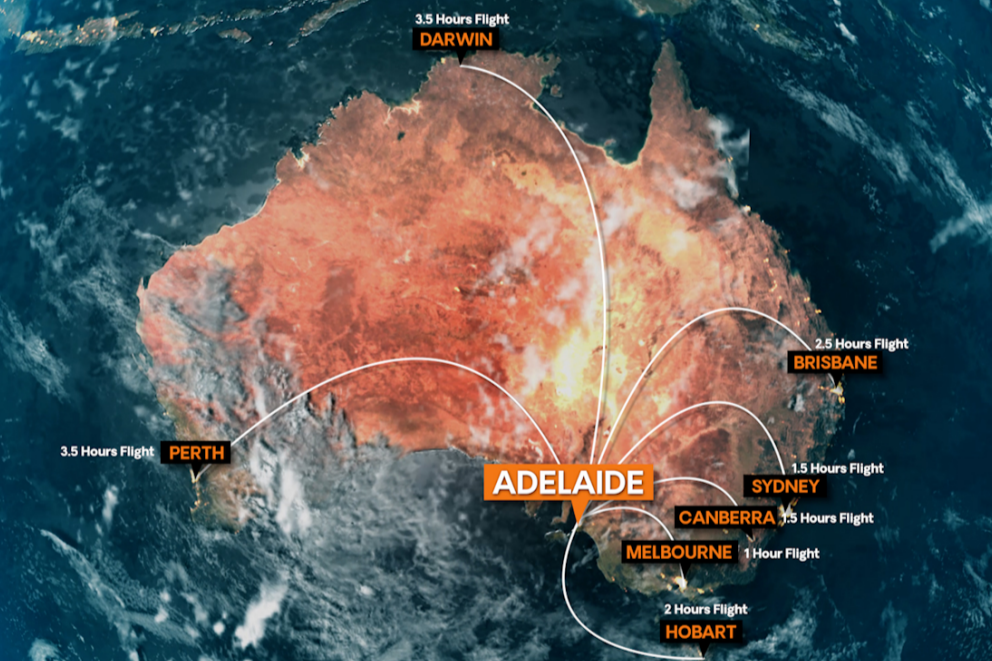
Adelaide is well-connected and easily accessible for delegates from around the globe. Currently, 12 international airlines fly directly into Adelaide, offering 32,500 seats. Through these flights, the city is linked directly, or with just one stop, to more than 470 destinations worldwide. Within Australia, Adelaide offers over 600 domestic flights each week, making it simple for interstate delegates to attend and for international visitors to explore other parts of the country. International-to-domestic transfers are quick and seamless, ensuring a smooth travel experience.
Transport in Adelaide
To use public transport including buses, trains, and trams in Adelaide, it’s recommended that you purchase a metroCARD for use on the Adelaide Metro network. You can purchase a regular metroCARD , or a metroCARD Visitor Pass, which gives you 3 days of unlimited travel for one fixed fee. These cards can be collected from the ground floor arrivals area at Adelaide Airport, or from Adelaide Railway Station or the Adelaide Metro InfoCentre in the City.
TRAINS
Adelaide’s rail network is a great way to visit attractions outside of the city. From Adelaide Railway Station, you can catch the Outer Harbor line train to reach destinations such as historic Port Adelaide and the beachside suburb of Semaphore. Trains depart every 20-30 minutes throughout the day.
TRAMS
Adelaide has a useful tram service that operates through the city centre and inner suburbs. It’s most convenient for travel within the city and reaching the popular coastal suburb of Glenelg. The service runs every 10-15 minutes from around 7:00AM to midnight. The tram is free to use in Adelaide city centre between Entertainment Centre Station and South Terrace Station. It links with popular bus routes, and passes major attractions such as Rundle Mall, Adelaide Central Market and West End.
BUSES
Adelaide has a free City Connector bus service in the city centre. There are multiple bus loops including the 98A/98C loop and the 99A/99C loop which operate in both clockwise and anticlockwise directions and depart every 15-30 minutes, seven days a week. These buses are particularly useful for travel between Adelaide’s hotels and attractions such as the South Australian Museum, Adelaide Botanic Garden, Adelaide Zoo, Adelaide Oval, and North Adelaide.
ACKNOWLEDGEMENT OF COUNTRY
APHC27OPCC will be held in Tarntanya on the lands of the Kaurna people.
We acknowledge the land on which this Congress is held is the traditional lands for the Kaurna people and that we respect their spiritual relationship with their country. We also acknowledge the Kaurna people as the custodians of the Adelaide region and that their cultural and heritage beliefs are still as important to the living Kaurna people today.
We also pay respects to the cultural authority of Aboriginal people visiting/attending from other areas of South Australia/Australia.